When extreme weather hits, storm damage to trees and shrubs is common. Emergency situations, like trees that have fallen on houses or cars, are the top priority for tree service companies. However, other tree problems can result from ice or heavy snow and should be reviewed shortly after the storm. This helps protect the long-term health of trees and shrubs.
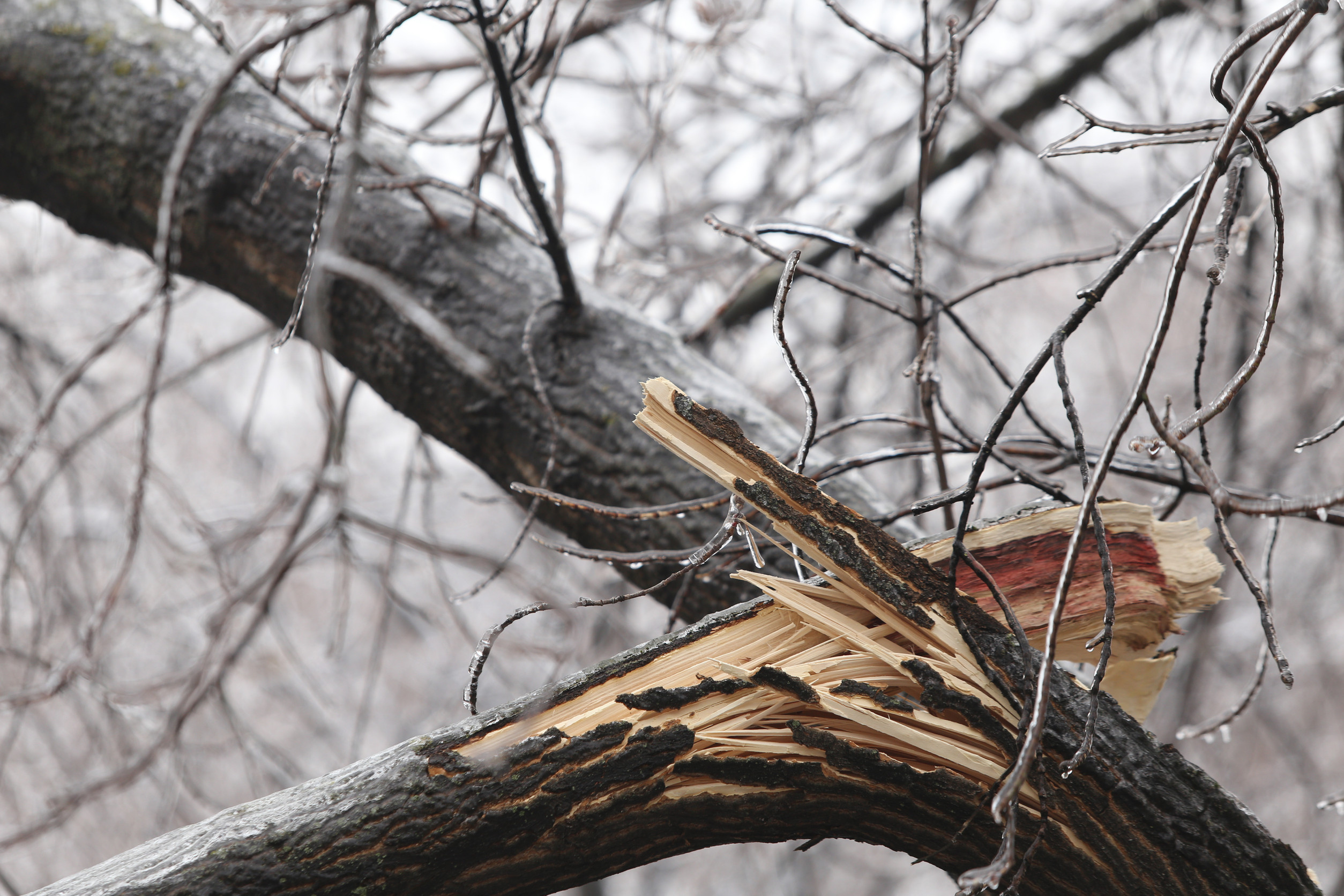
Assessing storm damage to trees
An ISA Certified arborist can visually check trees after a storm for potentially hazardous conditions like broken or hanging branches. Guidance from an expert can help you best understand how to preserve your trees or when removal may be necessary. In some cases, a formal tree risk assessment can be an important step in the process. This type of assessment helps you identify, analyze and evaluate tree risks for a single tree, several trees or an entire property.
Corrective pruning
Sometimes individual tree branches are broken in a storm while at other times, the canopy sustains major damage. Even drastic injury may be corrected with pruning to repair the structure and remove broken or dangerous limbs. Crown restoration aims to restructure the crown of the tree. It can require a series of pruning treatments over a period of years. Ultimately, the tree will have a stronger structure and more desirable form.
Keep in mind that even after severe weather or damage, tree topping or excessive pruning are not good options. Topping destroys the natural growth habits and removes too much live plant material, which further weakens the impacted tree.
Soil care and pest management for tree recovery
A storm damaged tree is a stressed tree. For trees under stress, soil care and fertilization are vital in recovery. Access to adequate nutrients and organic matter in the soil promotes strong, healthy growth. A soil sample can be tested to determine what is and is not in the soil beneath your trees. The soil test ensures that any fertilization contains the precise nutrients needed to reduce stress and optimize recovery.
Similarly, stressed trees are more prone to insect and disease infestation. Tree borers are a particular concern as many species specifically target trees under stress and their presence results in serious internal damage. Following bad weather, consider treatments that prevent borer attacks. Regular inspections are another good practice. It’s always best to identify pest problems early, before they become severe.