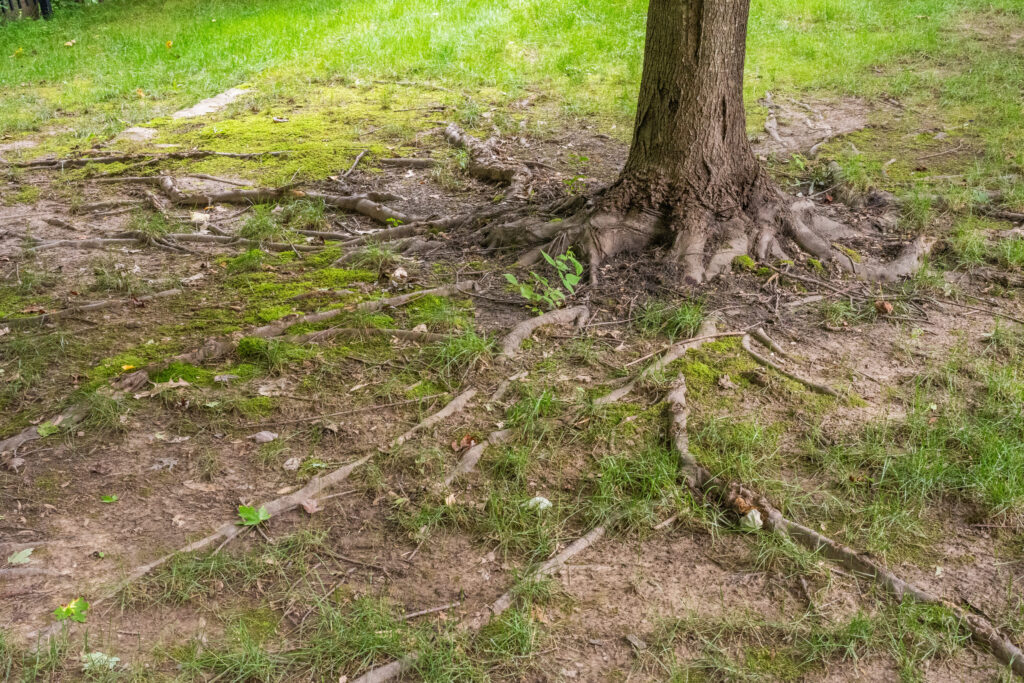
Trees sometimes grow roots at or slightly above the soil surface where nutrients and water and more readily available. Most roots actually grow shallowly outward, not deep underground, so seeing them reaching above ground is not uncommon. This can result in tripping hazards and uneven surface areas. Further, it can cause challenges for mowing and lawn care near trees.
What not to do
The first mistake when it comes to surface roots is a big one. That’s attempting to cut or grind down visible roots. Damaging the root system damages the tree. It limits a tree’s ability to uptake water vital nutrients from the soil. This type of damage can also make trees more susceptible to disease and insect infestations. Root pruning can be done in some cases depending on the tree and growing conditions, but should be managed by a Certified Arborist to minimize the negative impact. Cutting too much of the root system is an easy mistake to make and will result in the loss of your tree.
Changing the grade by adding additional soil to cover roots is another problematic approach. Piling up a heavy layer of soil over roots cuts off their oxygen supply and will ultimately suffocate the tree.
Recommendations for dealing with surface roots
Developing mulched beds is the best strategy in areas where you can see roots. A thin layer of mulch, from the root flare to the edge of the canopy, will help protect the roots. As with soil, piling up a heavy layer or mounding a mulch volcano around the trunk is harmful and not helpful. Just a few inches of fresh wood chip mulch is a good practice and creates a healthy growing environment.
Shallow-rooted tree species
Many large trees develop surface roots. As tree roots age and grow, they thicken and push upward. However, some tree species are naturally more shallow rooted. This includes maple, especially silver maple, as well as willow, sycamore and beech. For trees known to develop shallow roots, avoid planting them near paved surfaces or other areas were surface roots will cause issues. Keep in mind, though, that other conditions may also impact the development of roots growing at or above ground level. Poorly drained or compacted soil can force roots to the surface. Soil erosion due to rain, wind or poor grading can also expose roots.