You know there are health symptoms people should not overlook. It’s the same for your trees! They often display key signs indicating problems exist or could develop if ignored.
Here are some symptoms that warrant a call to an ISA Certified Arborist for a professional assessment.
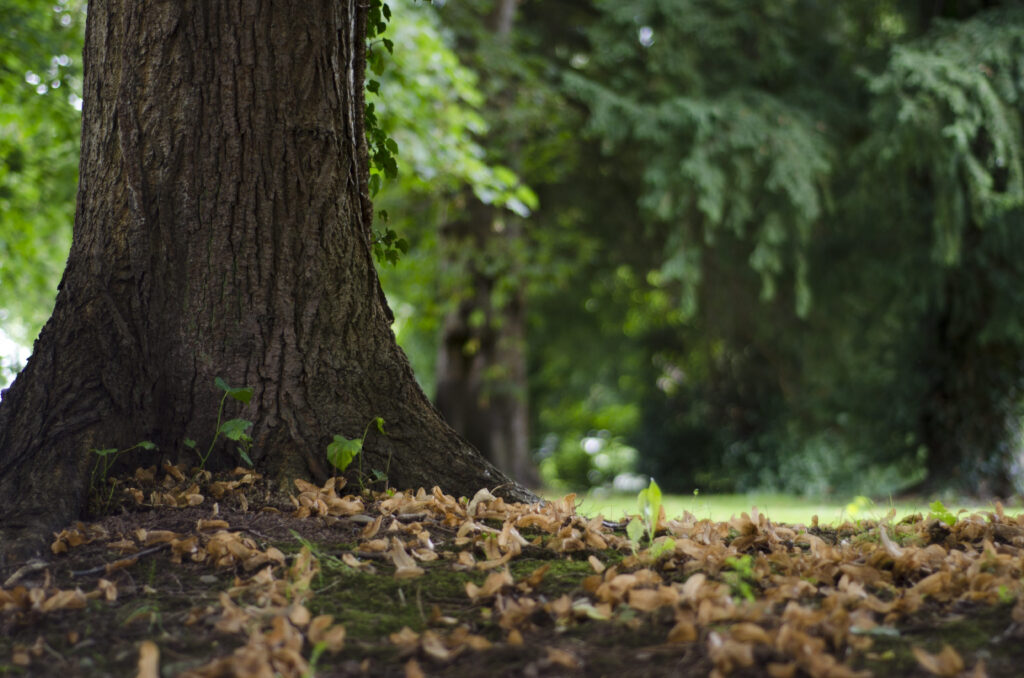
An obscured root collar or fungal growth on or near the roots
Most trees don’t, and shouldn’t, grow straight out of the ground like telephone poles. They have a distinct, visible flare where the stem (trunk) joins the root system. It’s a concern if this flare is covered by soil or mulch. When this happens, disease, girdling roots and insect infestations are more likely to occur. If this condition persists and disorders develop, the interruption of water flow from the roots to the branches will lead to the crown’s decline. With this in mind, ensuring this critical region is visible and free of disorders is important. Excavation of the buried root collar is a priority.
Additionally, watch for mushrooms or fungal growths on or near the base of the tree. Their presence can indicate wood decay and root disease.
Oozing or bleeding on stems and branches
Wet spots on branches and stems and sunken areas can be a symptom of an unhealthy tree. Such issues indicate sap flow from wounds stemming from insect borers, disease pathogens or environmental disorders. Over time, bacteria and other organisms may colonize this sap, resulting in a discolored flux that may have a sour odor.
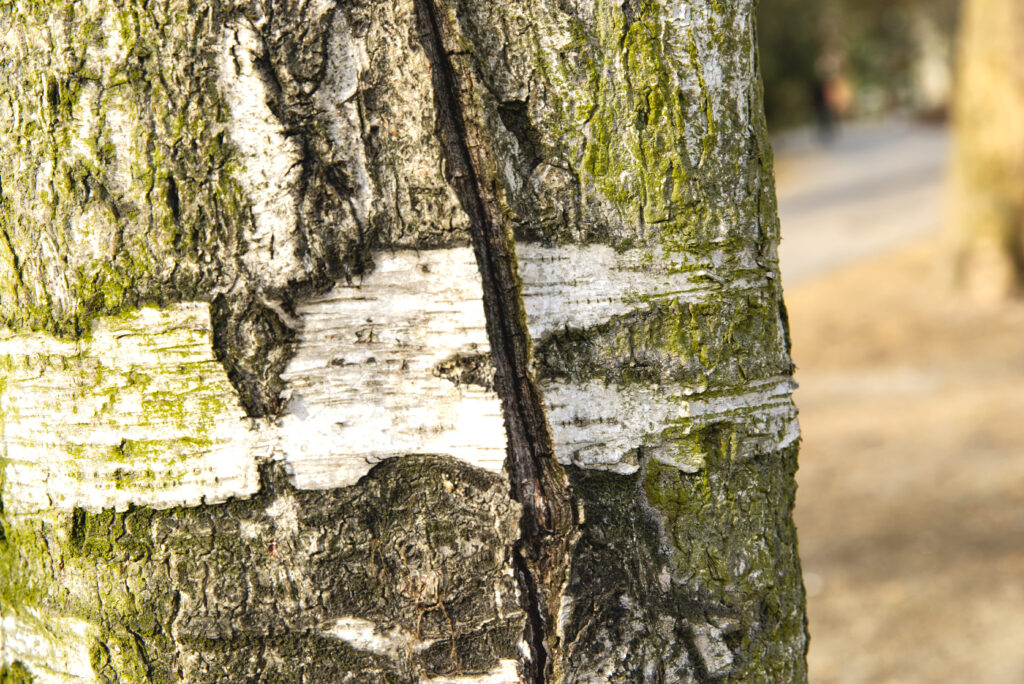
Cracks or splits on the trunk or bark
Physical wounds or cracks can result from weather such as sunscald or frost cracks and winter injuries. Lawn equipment or construction equipment can also damage trees. Depending on the damage and cause, an assessment can help determine if remedial action is necessary.
Delayed budbreak in spring
Trees initiate new growth in spring depending on species, weather conditions and the health of the plant. If a plant seemed later than usual breaking bud and if the resulting new growth appears sparser than normal, this could indicate a root or vascular disorder. On the other hand, delayed bud break is typical for newly planted trees.
Sparse canopy
When the upper branches of a tree begin to die this is often a sign of an underlying health issue. It is sometimes called canopy dieback. Dead or dying branches in the canopy indicate stress or disease.
Yellowing, discolored or wilting foliage
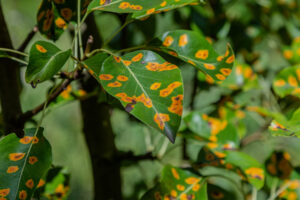
Yellowing and loss of leaves on the interior portions of the crown may be a symptom of water stress. That means too little or too much soil moisture. In some cases, it may be an early indication of a root or soil disorder that is inhibiting water uptake. Generally, any unusual discoloration, wilting or curling of the foliage can be a sign of an unhealthy tree. Keep an eye out for dark spots, yellowing or a brown or scorched appearance on the leaves.
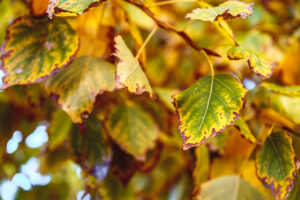
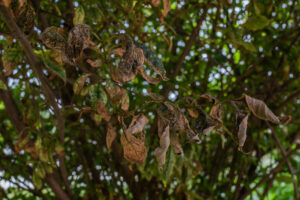
Premature autumn color and leaf drop
Trees under stress will frequently develop autumn coloration early and cast their leaves prematurely. This condition is most commonly associated with serious root and soil disorders but also can be caused by vascular diseases and certain boring insects.
Keep in mind that a yearly check up isn’t just a good idea for you. It’s great for your trees as well! A regular assessment helps ensure symptoms of an unhealthy tree can be identified and addressed before they become more serious.