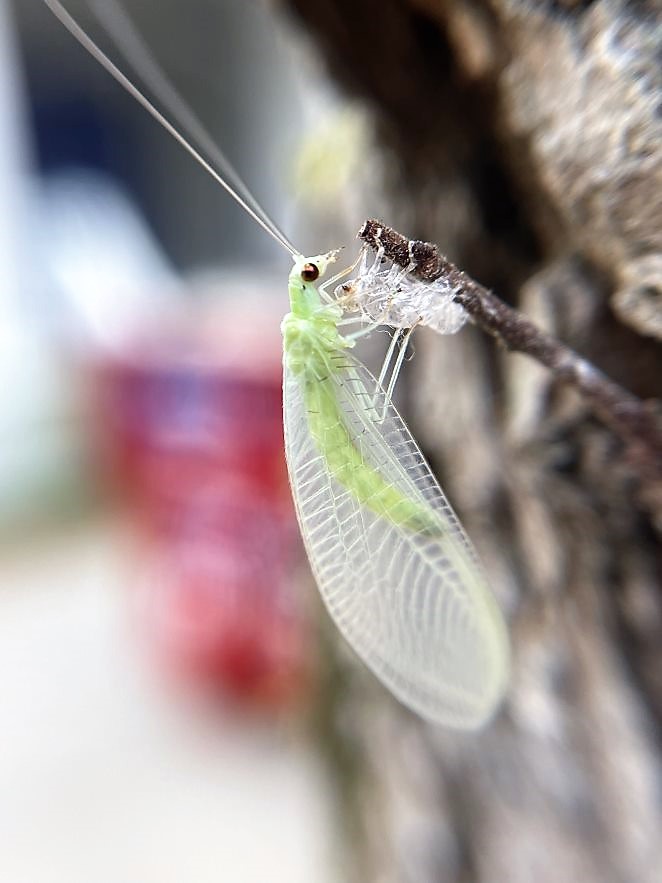
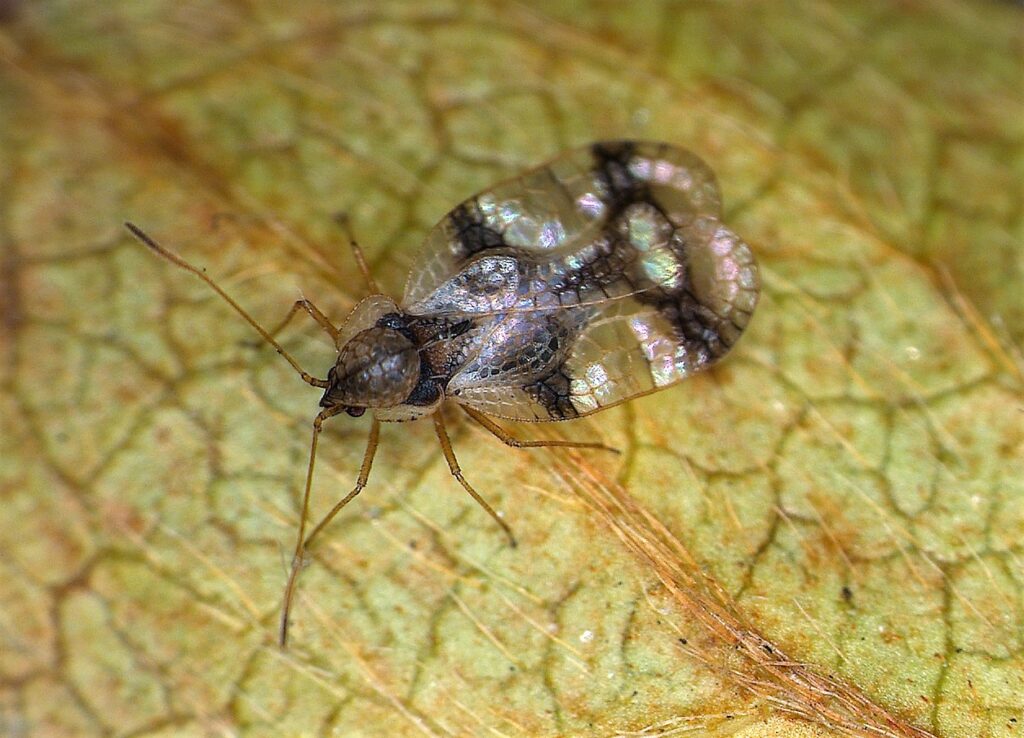
Lace bugs are damaging insects that attack many deciduous and evergreen plants. These pests feed by piercing leaf tissue and sucking out nutrients and chlorophyll. Adults have a somewhat square body shape. They get their name from their lacy wings, which are transparent and have a detailed, stained-glass pattern. Before fully developing, the young, wingless nymphs have a dark body and spiny back.
Types of lace bugs
These insects are a very common landscape pest. There are two distinct types: those that attack evergreens and those that attack deciduous plants. Those found on evergreens spend winter in eggs on the underside of leaves. On the other hand, those on deciduous plants overwinter as adults on stems and under bark. Lace bugs emerge in spring and multiple quickly. There are often multiple generations per year. As such, populations can be quite high by late summer.
Symptoms of infestation
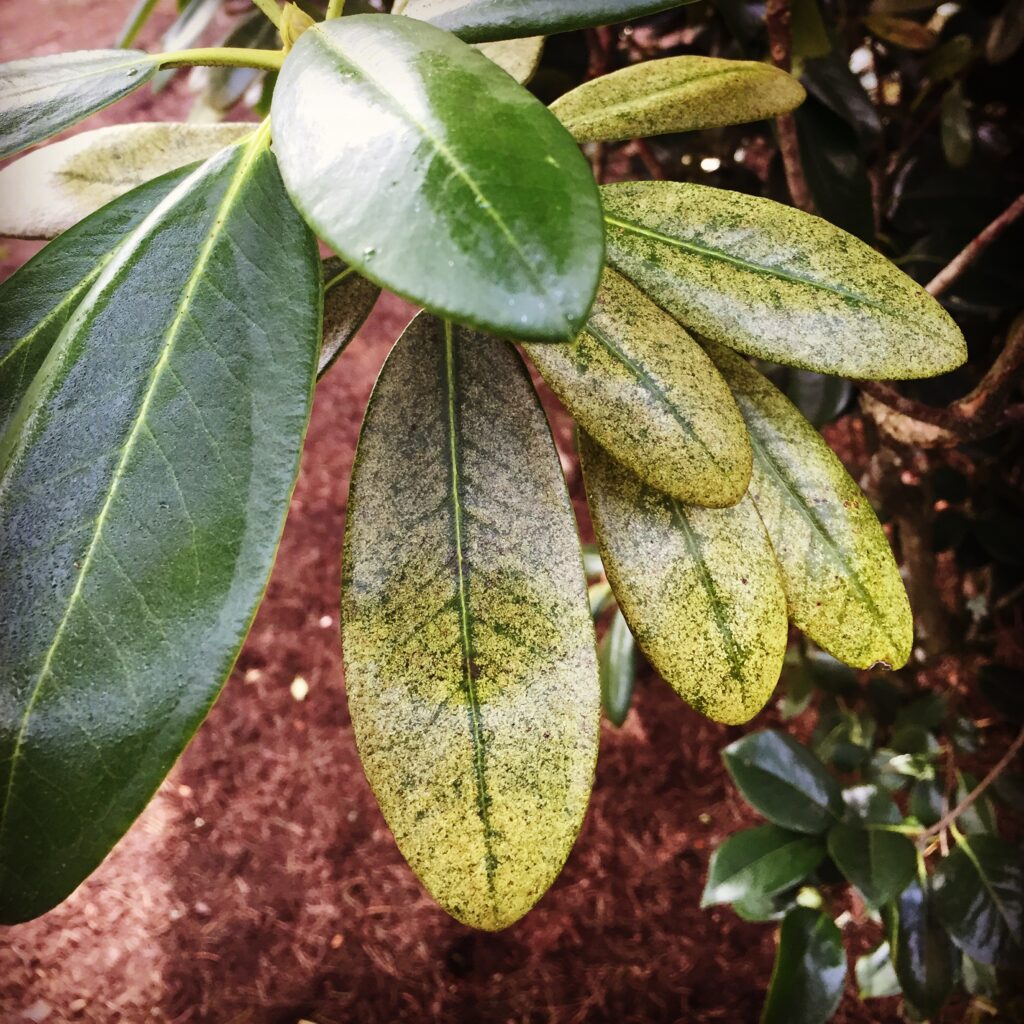
It’s easy to miss early damage. The pests feed on the bottom of the leaves, where they spend most of their lives. However, you’ll see symptoms of feeding on the top of leaves. Slight, whitish or yellowish stippling is the first sign. Over time, discoloration and damage will progress with leaves eventually turning brown and falling.
Common hosts
Species like andromeda lace bug, elm lace bug, oak lace bug, azalea lace bug or sycamore lace bug feed primarily on the host plant for which they are named. However, many will attack other trees as well. You can find azalea lace bug, for example, on willow trees. Hawthorn lace bug feeds on hawthorns as well as serviceberry, buttonbush, quince, pyracantha and some fruit trees.
Managing lace bugs
Lace bugs rarely kill large trees but they can add to a plant’s stress. Their presence can particularly be an issue for smaller plants and shrubs. Further, pest pressure is problematic for trees that have been recently planted or those in tough growing conditions.
There are effective treatment options. One alternative is management by natural enemies. Other insects such as predatory beetles and green lacewings voraciously feed on garden pests. Release of beneficial insects like these can be an effective facet of a plant health care program.