Honeydew is a sugary waste substance that many sap-sucking insects excrete after feeding. Tree and shrub pests including aphids and scale produce honeydew, which can attract ants, flies, hornets and yellow jackets. You’ll find the liquid on leaves and other plant parts. Additionally, it can drip onto nearby surfaces or objects beneath infested trees such as paved surfaces, decks, cars or furniture.
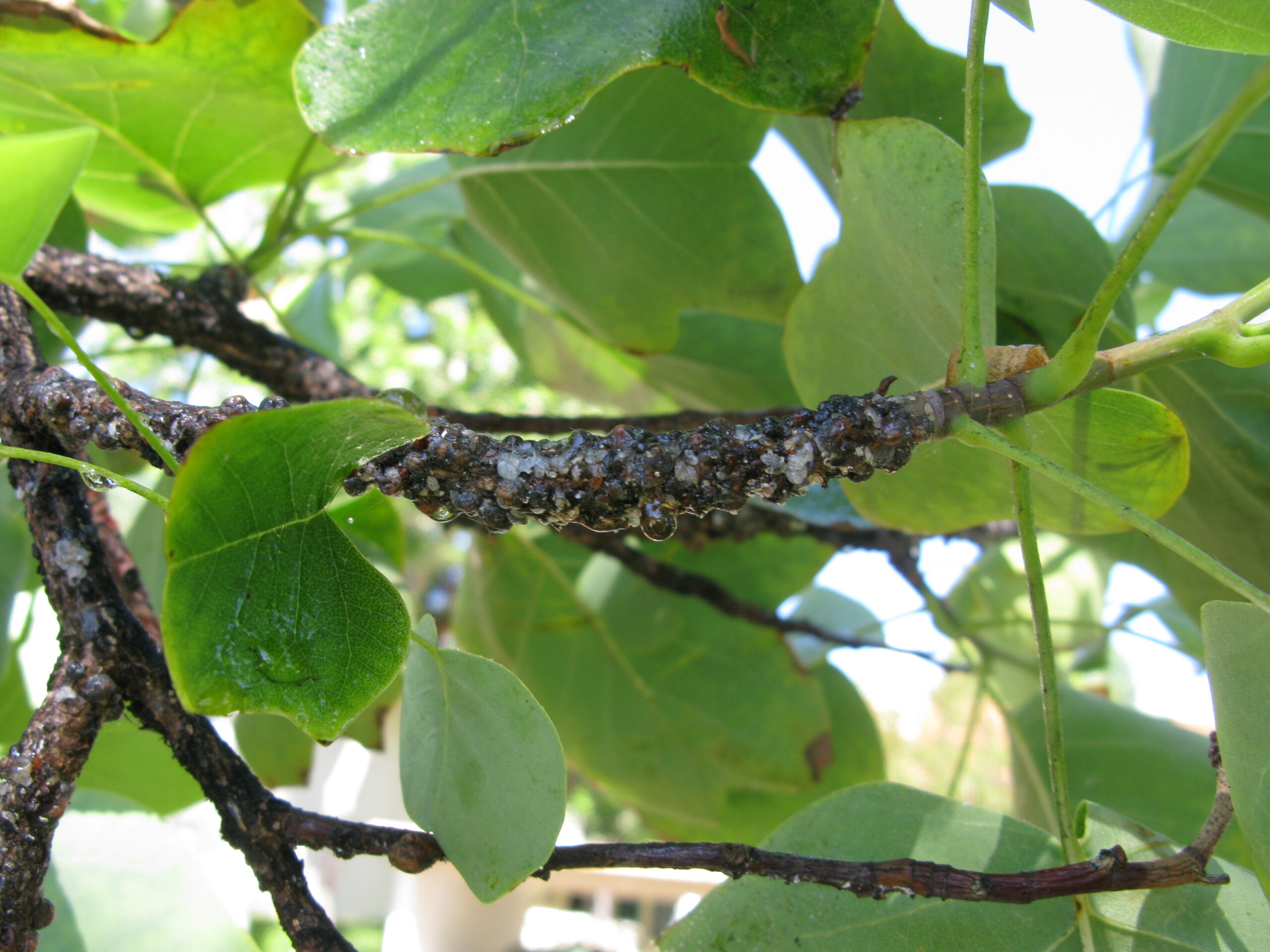
Though the presence of honeydew is a nuisance, the liquid itself is not a concern for the tree. However, the underlying pest infestation is. Sap-sucking insects use their mouthparts to feed on chlorophyll and other tree nutrients. When a tree or shrub is infested, leaves can become discolored and may begin to wilt and drop. Further, because these pests are small and reproduce quickly, populations build rapidly and compound the damage. As infestations grow, there will also be more of the sticky liquid as well.
Sooty mold fungus
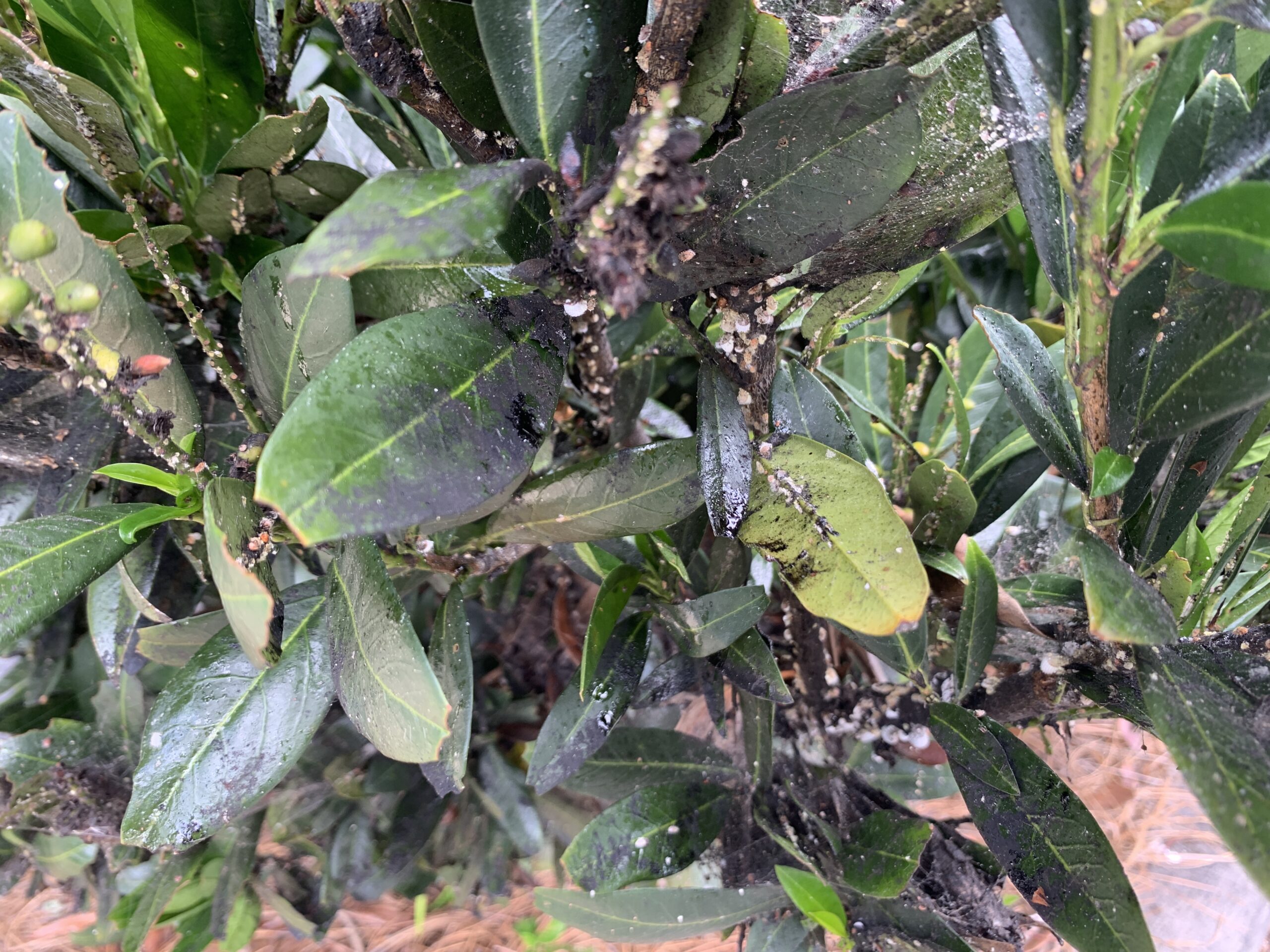
Honeydew serves as a food source for several species of sooty mold fungus. This fungus can grow on any surface with honeydew, including on plant material. Sooty mold is dark in color with a powdery appearance, hence its name. It does not infect the plant itself. Rather, sooty mold grows where honeydew accumulates. While it does not directly damage the plant, severe cases of sooty mold can coat the leaf surface. The coating can restrict access to sunlight and reduce a plant’s ability to carry out photosynthesis.
Given its dark color, sooty mold is often very noticeable. In fact, is is more noticeable and easily spotted than honeydew. Seeing it on a plant is a sign that there is a pest outbreak you should address.
Preventing honeydew and sooty mold
Both honeydew and sooty mold are signs of an underlying pest infestation. Address the underlying issue and both will wear off over time.
The first step is correctly identifying what pest is present. Many aphids, scales, whiteflies and even planthoppers produce honeydew. Correctly identifying the pest will guide next steps. Some pests, like waxy scales, can be difficult to control. Depending on the pest and level of infestation, foliar or soil-injected treatments may be recommended. Alternatively, some pests can be controlled by releasing natural enemies such as lady beetles or green lacewings.