

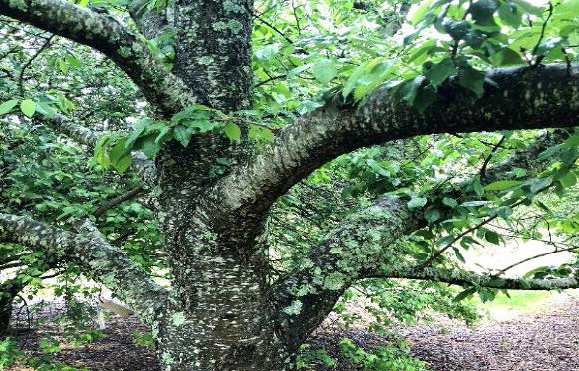
Tree bark is often colonized by growth of one or more types of lichen (pronounced ‘liken’). Lichens are non-parasitic organisms that consist of a symbiotic relationship between a fungi and green algae or cyanobacterium.
The fungi collect water and minerals from the air and substrate surface, while the algae/cyanobacterium contribute photosynthates and energy to the partnership. Lichens grow on the surface of a plant or object (trees, rocks, dead wood, grave stones, etc.) without causing it any harm.
Symptoms
When people notice a tree trunk completely covered in lichen, they sometimes wonder if this is affecting the health of the tree, especially if the canopy looks thin. But lichens grow best in sunny locations with good air quality, which is why they grow more abundantly on tree trunks exposed to light. A tree in decline or with a thin canopy may create a conducive environment for lichen growth, but the lichen is not harming the tree.
Management
Your Bartlett Arborist Representative can evaluate the tree and its surrounding environment for stress, disease, and insect problems that contribute to poor tree health. Stress, in particular, can come from environmental and cultural care problems such as compacted soil and soil moisture/nutrient issues. Soil care and root invigoration may help to improve tree and shrub health should any of these conditions exist. Lichen is less likely to grow in a setting of increasing foliage density and less sunlight reaching inner branches or the trunk. Chemical management strategies to control lichen growth are not recommended given that lichens are harmless.