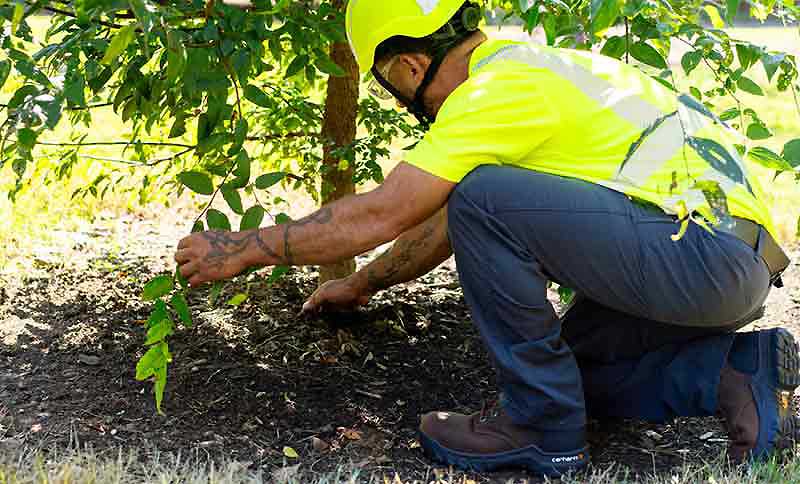
Applying mulch around trees and shrubs is often seen as a routine garden chore to help tidy the landscape. Proper mulching, however, is also one of the best things you can do to promote healthy roots and soil. When done correctly, mulching can work for you to achieve the following:
- improve soil structure
- enhance soil aeration, water infiltration and retention
- moderate extreme soil temperatures
- suppress weeds
- reduce soil compaction over time
- provide slow release of nutrients
- increase the number and diversity of beneficial organisms
A mulch ring around a tree also can prevent stem damage from lawn mowers and string trimmers.
Whereas almost any form of organic matter can be used as a mulch, the fresh woodchips that arborists produce tend to provide the best balance of benefits. This material includes wood, bark, twigs, and leaves, which offers a balance of carbon and nitrogen comparable to what might be found in nature. The different sizes, compositions and textures of materials decompose at different rates and encourage a diverse soil biota. In addition, arborist woodchips are often free for the asking!
When applying mulch, never pile it around the base of the plant. This practice, called “volcano mulching” risks holding excess moisture against the stem, potentially resulting in disease or decay and obscuring other problems. Mulch should be replenished as needed to maintain a depth of 2 to 4 inches, depending on the tree species. As a general guide, mulching should start at the base of the trunk with no landscape fabric beneath and extend as far out to the dripline of the crown as possible. At minimum, start with a 3-foot ring for small trees; but the larger the mulched area, the better it is for the tree, root function, and soil health.