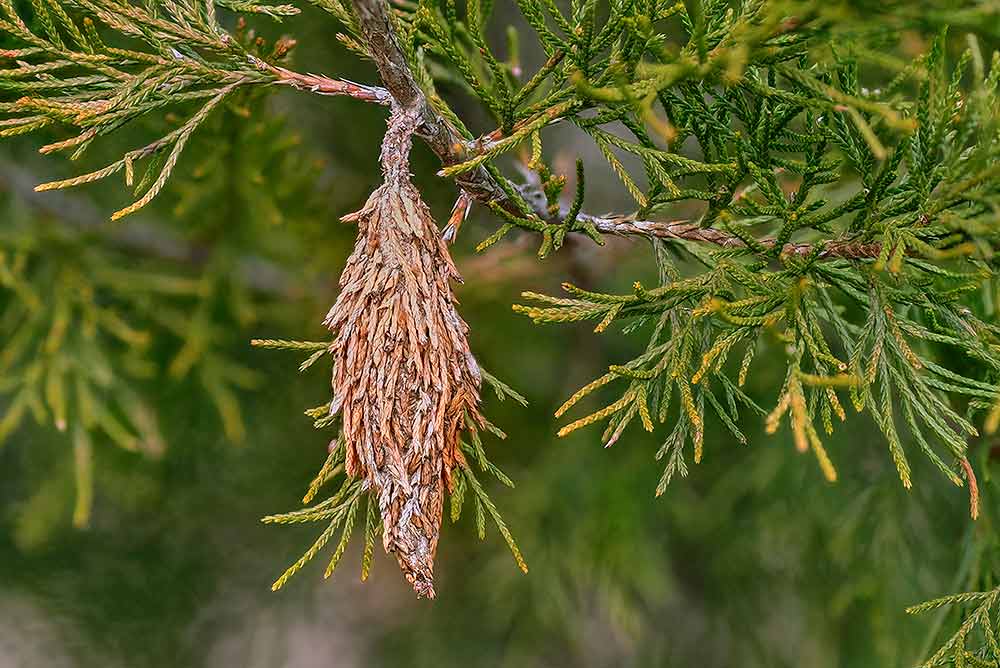
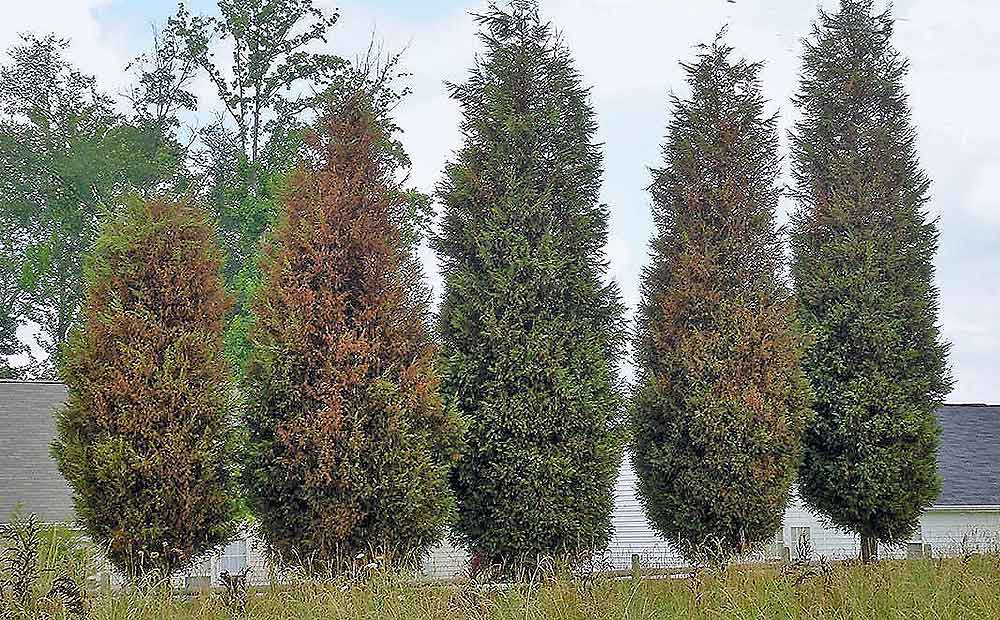
The bagworm, Thyridopteryx ephemeraeformis, is an unusual caterpillar that defoliates many ornamental trees and shrubs throughout the eastern half of the United States. The name comes from the bag-like structure made of leaf fragments bound together with silk produced by the larva. Most of this insect’s life is spent within this protective bag. Bagworms blend in and often go unnoticed until significant defoliation has occurred.
Host Plants Bagworms feed on more than 125 species of plants. Conifers such as arborvitae, juniper, cedar, cypress and white pine are preferred hosts, and in parts of the Midwest, deciduous trees, particularly maple, sycamore and locust, are frequently infested. Favored species are identified readily in the dormant season by the presence of bags on the plant.
Description The spindle-shaped bag structures are the principal evidence of a bagworm infestation. Bags are approximately 1/8 inch long when first visible and can reach approximately
2 inches long and 1/2 inch in diameter when fully developed. Larvae are approximately 1 inch long when fully grown. The body is dark brown with a yellow head region and is hairless. The female moth is worm-like and lacks wings, legs, antennae, and eyes; it is yellowish white and nearly hairless. The male moth resembles a wasp with a black body and dense hairs; its wings are clear and approximately 1 inch across.
Life Cycle Bagworms overwinter as yellowish eggs within the bag. Some bags contain only male larvae, so eggs will not be found in every bag. Eggs hatch from late-May through mid-June, and as larvae emerge they begin feeding and constructing new bags. As larvae continue to feed and grow, they enlarge the bag to accommodate their increased body size. In late-July through early August, fully grown larvae secure their bags to a twig with silk and pupate within the bag. Male moths emerge in about one month and fly to a bag containing a female. Mating occurs and eggs are deposited in the protective bag so larvae can emerge the next year.
Control Removing and destroying the bags can reduce light bagworm infestations on shrubs and small trees. This should be done in the dormant season before eggs hatch.
On conifers and other plants with heavy infestations, management is frequently necessary. Please contact your Bartlett Arborist Representative for information on effective control of this pest.