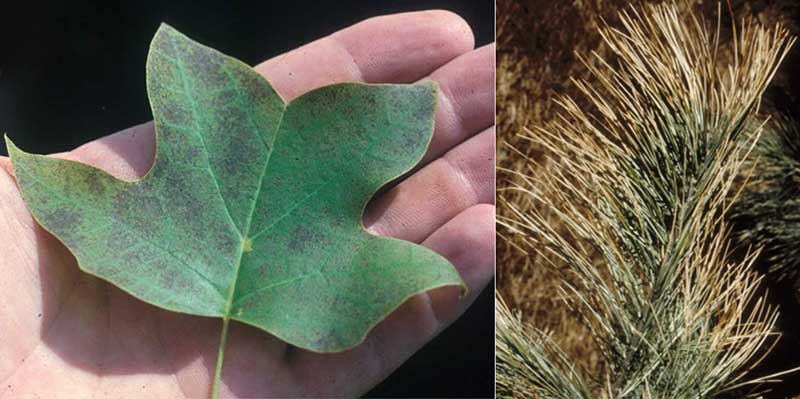
Air pollution can injure trees and shrubs, sometimes even when pollution levels are below the threshold for public health warnings. The most common plant-damaging airborne pollutant is ozone (O3), which forms when sunlight reacts with nitrogen oxides and hydrocarbons from sources such as vehicle and industry exhaust. Sulfur dioxide (SO2), mostly produced by fossil fuel combustion, refining, and smelting, can also damage plants. Other air contaminants, including fluoride, ethylene, and chlorine, may cause injury, but these problems are usually localized near or downwind of industrial sources.
Pollution injury is most likely during hot, humid weather, especially when temperatures are above 90°F and humidity is high. These conditions may occur with temperature inversions, when a warm layer of air traps pollutants near the ground. During these episodes, ozone and sulfur dioxide can build up enough to injure leaves and needles.
What you may notice
On broadleaved plants, ozone typically affects the upper surface of leaves that are in full sun exposure. It causes small yellow, tan, bronze, or purple-to-reddish flecks that may merge into larger discolored areas, especially between the small veins. On sensitive conifers, yellow banding of the needles may occur. Severely affected leaves may display premature fall coloration and drop early after a period of exposure, but new leaves produced afterward usually appear normal.
Sulfur dioxide damage can develop quickly, sometimes within a day. On conifers, scattered needles may yellow or turn tan to reddish brown. On broadleaved trees, symptoms often resemble leaf scorch, with yellowing or browning along leaf edges or between veins although the veins remain green.
Why diagnosis can be difficult
Air pollution injury can look like several other common tree problems: heat, drought, winter injury, nutrient deficiencies, insects such as mites or aphids, and even pesticide misapplication can produce similar discoloration, scorch, stippling, or needle browning. For this reason, symptoms should be evaluated in context, including recent weather, site conditions, nearby pollution sources, and whether multiple plants show similar damage at the same time.
Some trees are more sensitive than others.
Tree species, cultivars, and even individual trees can vary in sensitivity. Some trees on a property may show symptoms while nearby trees of the same species remain healthy. Species that may be more sensitive to ozone include big-leaf linden, fastigiate English oak, ‘Imperial’ honeylocust, Kentucky coffee tree, ‘Bloodgood’ London plane, sycamore, tulip poplar, zelkova, and white pine. Maples, birches, and many oaks and honeylocust varieties are generally more tolerant.
What property owners can do
Leaves and needles already damaged by air pollution cannot be repaired. However, good overall tree care can help reduce stress and improve resilience. Proper watering during dry periods, maintaining mulch, avoiding unnecessary root or trunk injury, and following appropriate fertilization recommendations can support tree health. In areas with repeated pollution problems, selecting more tolerant tree species is the best long-term strategy.