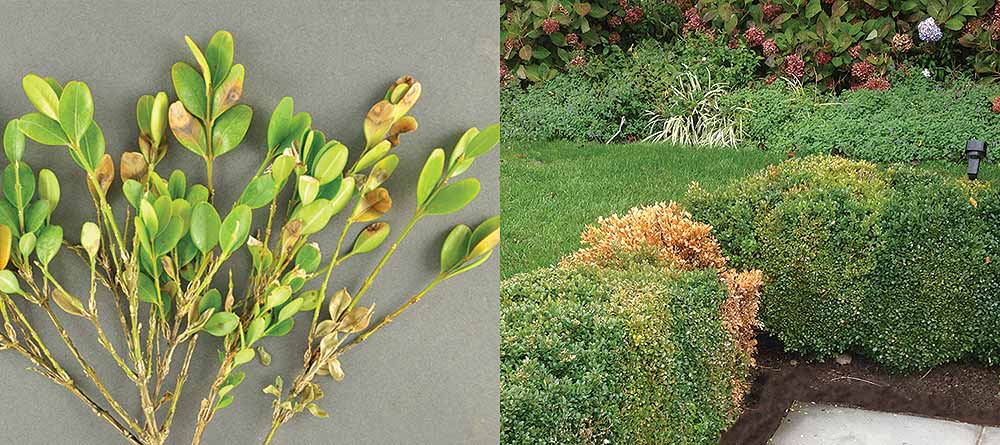
Boxwood blight is a fungal disease that causes leaf spots, twig cankers, rapid defoliation, and eventual death of boxwood if left unmanaged. English and American boxwood are both severely affected. Thankfully, there is partial tolerance in some boxwood species, especially those from Asia, and popular hybrid cultivars. Pachysandra and sweetbox, other members of the boxwood family used in landscapes, are also susceptible to boxwood blight.
Since discovery of this disease in the United States in 2011, boxwood blight has spread rapidly across North America wherever boxwood is grown. The causal fungus, Calonectria pseudonaviculata, thrives in moderately warm (60°F–80°F) and wet weather. Abnormally warm, humid, and exceptionally rainy seasons can result in severe boxwood blight pressure in landscapes and may contribute to increased disease severity for several years.
Successful management of boxwood blight involves a multifaceted program that includes sanitation (e.g., removal of infected tissues, cleaning of tools), avoidance of overhead irrigation, and application of products that protect new growth and reduce fungal sporulation. Severely affected plants, which have been infected for multiple years, should be removed when appropriate. Removal of the defoliated leaf litter can help reduce inoculum. This can be followed with a thin layer of mulch to minimize the remaining infectious spores splashing up onto healthy branches. When possible, boxwood should not be pruned during the summer months. Lastly, applications of preventive products can protect new flushes of growth. Multiple applications throughout the season are needed for good success. Although boxwood blight can result in plant death, good responses are seen with our curated management programs.