Tea scale are tiny, sap-sucking insects common across the Southeast U.S. as well as in Texas and California. These pests attach themselves to the underside of leaves, feeding on plant sap. The result is unsightly stippling on the upper surface of leaves. In severe cases, the infested plant can experience dieback or begin dropping leaves early.
Favorite host plants
Tea scale is a major pest of camellias and hollies. In fact, the pest likely first became established in the U.S. after being imported here on camellias. You can commonly find it on a number of additional ornamental trees and shrubs such as dogwood, bottlebrush, boxwood and euonymus.
The insects can be difficult to spot. They are primarily located on the underside of the leaf. Males produce a white covering while adult females are flat and brown. The immature crawlers are small and yellow. Tea scale populations often grow unchecked and untreated with multiple generations overlapping and resulting damage quickly progressing. In these severe cases, there are so many pests present at different lifecycle stages that the leaf undersides can have an almost fuzzy appearance.
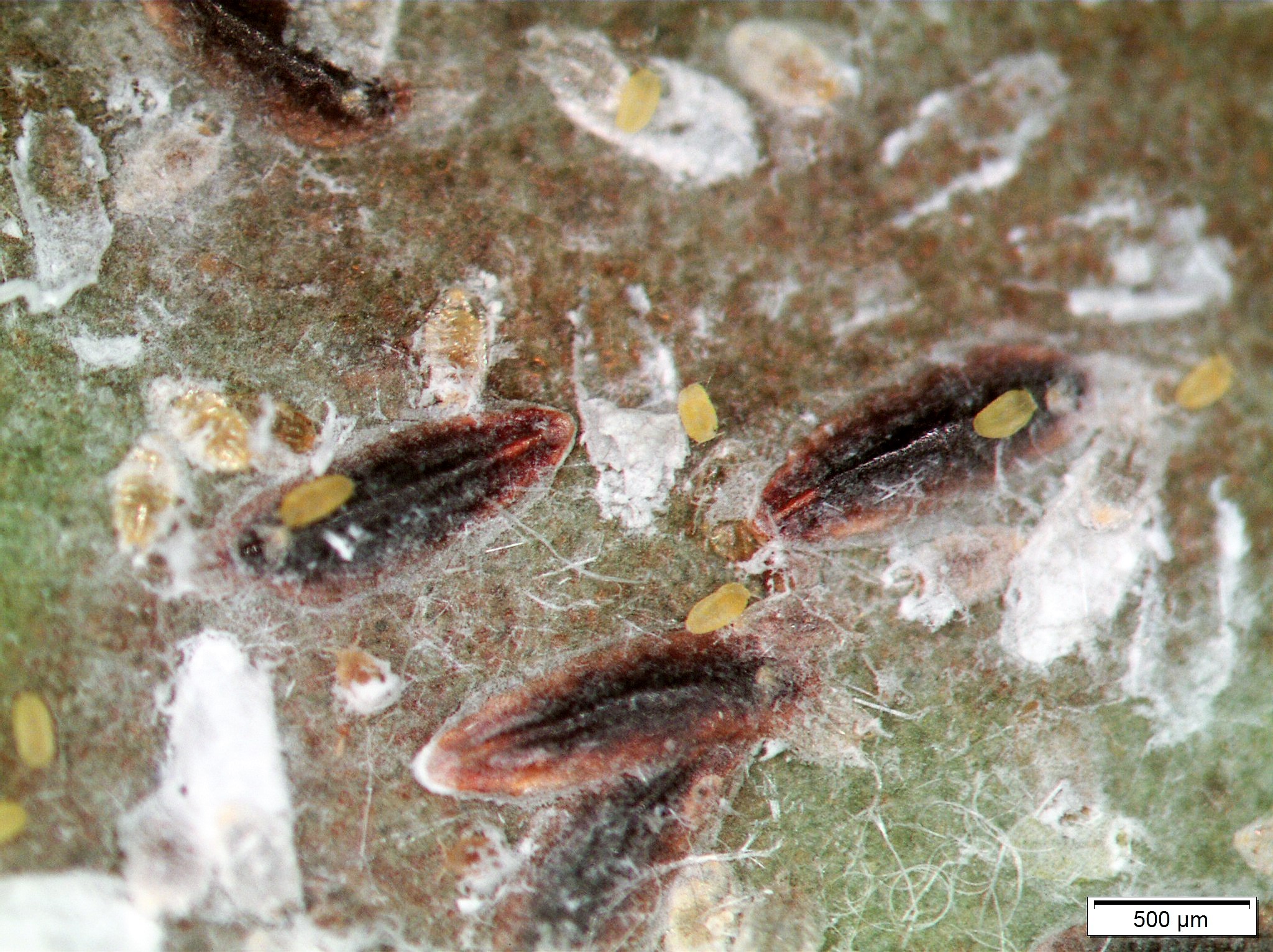
Tea scale activity in early spring
In the warm, humid climates where it thrives, tea scale can remain active year-round. However, eggs in other areas generally hatch between March and April and the crawlers begin feeding as they mature. Some warmer regions in USDA zones 7-10 may see emergence as early as February. Infestation actively spreads during the crawler stage and this is also the time during which you should apply treatments.
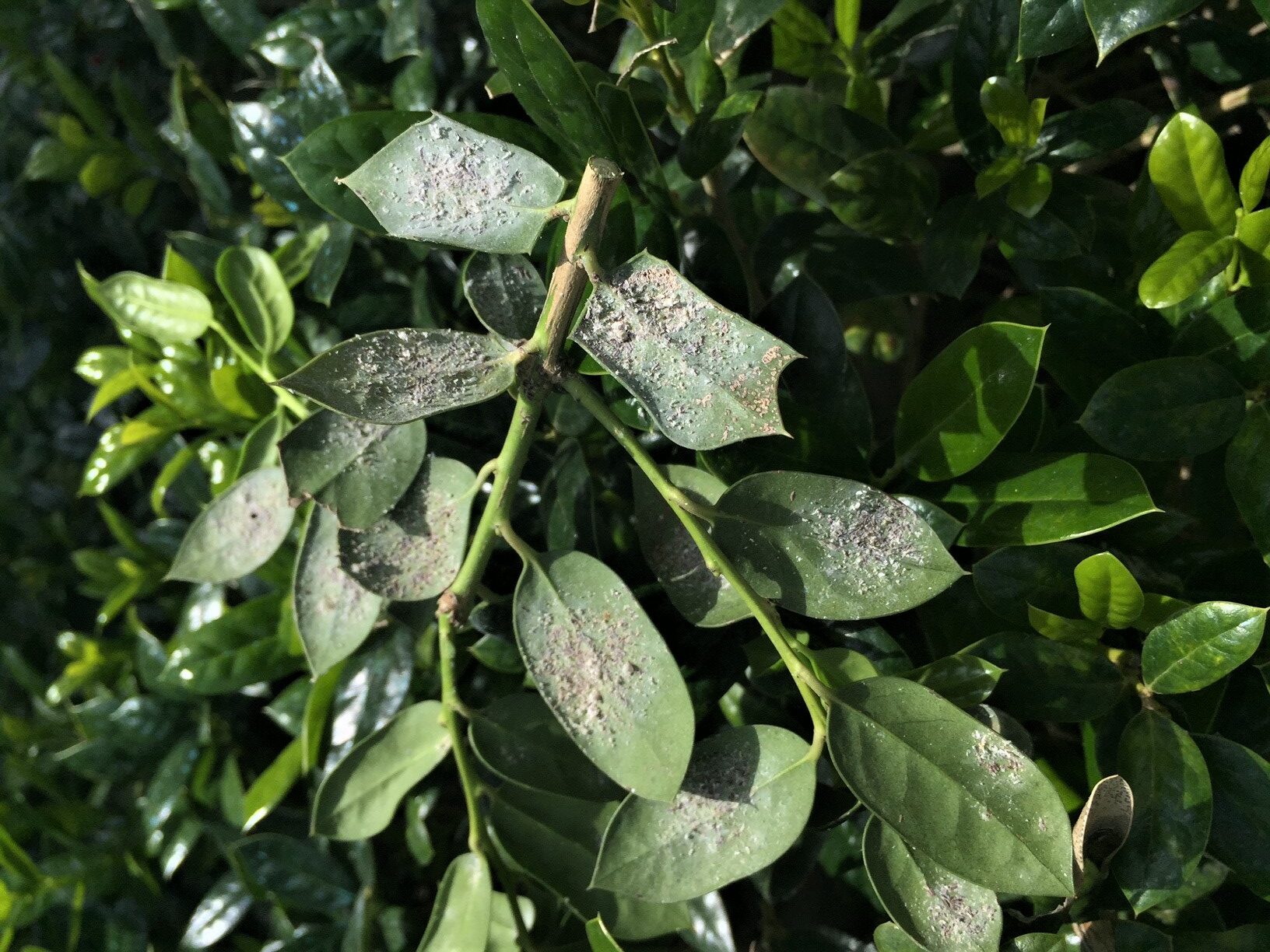
Management of tea scale
There are some insect predators of tea scale, but often not enough to sufficiently manage outbreaks. Application of horticultural oil can reduce pests overwintering on the leaves. The best time to treat active infestation is as soon as crawlers emerge. Repeat visits and routine monitoring, especially of favored hosts, can ensure the insects are identified and treated early – before serious damage.