Soil pH, the measurement of how acidic or alkaline the soil is, directly impacts tree health. The scale for measuring pH goes from 0 to 14. A pH of 7 is considered neutral. The lower that number, the more acid the soil. Likewise, the closer to 14, the more alkaline.
Why soil pH matters for trees
For trees and shrubs to produce their own food, they need a number of essential nutrients for photosynthesis, growth, defense and reproduction. These nutrients come from the soil, but are often unavailable due to a high or low soil pH. That pH level impacts the availability of the nutrients and, as a result, impacts plant growth and health. For example, in acidic soil, pH makes access to phosphorous, calcium and other elements less available to trees and shrubs. Alternatively, the high pH of alkaline soil means iron, manganese and zinc are not available to plants, even when they are present in the soil.
Modifying the pH
Some soils are naturally more acidic or alkaline. Areas with consistently high rainfall and humidity as well as places with sandy soils typically have soil that is usually higher in acidity. On the other hand, regions with low rainfall or desert soil will be higher in alkalinity. A number of natural factors influence soil pH such as weather (temperature and rainfall), native vegetation and the decay of organic matter.
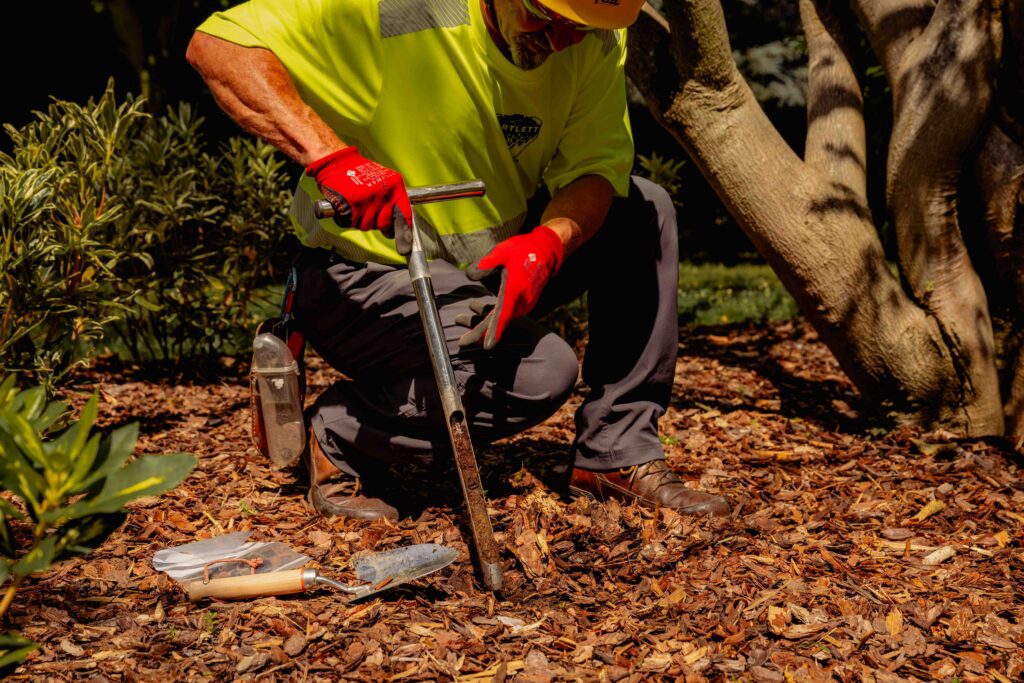
Fertilization and soil care, including the addition of organic matter, can actively modify soil chemistry when the pH level, and lack of nutrients, is harming tree growth and health. The first step is soil testing. A soil test analyzes nutrient levels, pH level, organic matter and nutrient retention capacity in a particular soil. It helps guide recommendations and ensures fertilization contains the precise nutrients needed for optimal growth and health of the plant. Further, it reduces the potential for applying unnecessary nutrients and assures fertilization adequately addresses problems.
Different tree species thrive in different soils
Soil testing is also a useful tool if you’re looking to add trees and shrubs to your landscape. While many species favor a neutral to slightly acidic soil, there are some that can comfortable handle more alkaline soils. Hawthorn, linden and Eastern redbud, for example, tolerate alkaline soils well. When the soil pH is acidic, magnolias as well as some oaks and maples will grow well. This list of optimum soil pH ranges for common tree species can help guide planting decisions.