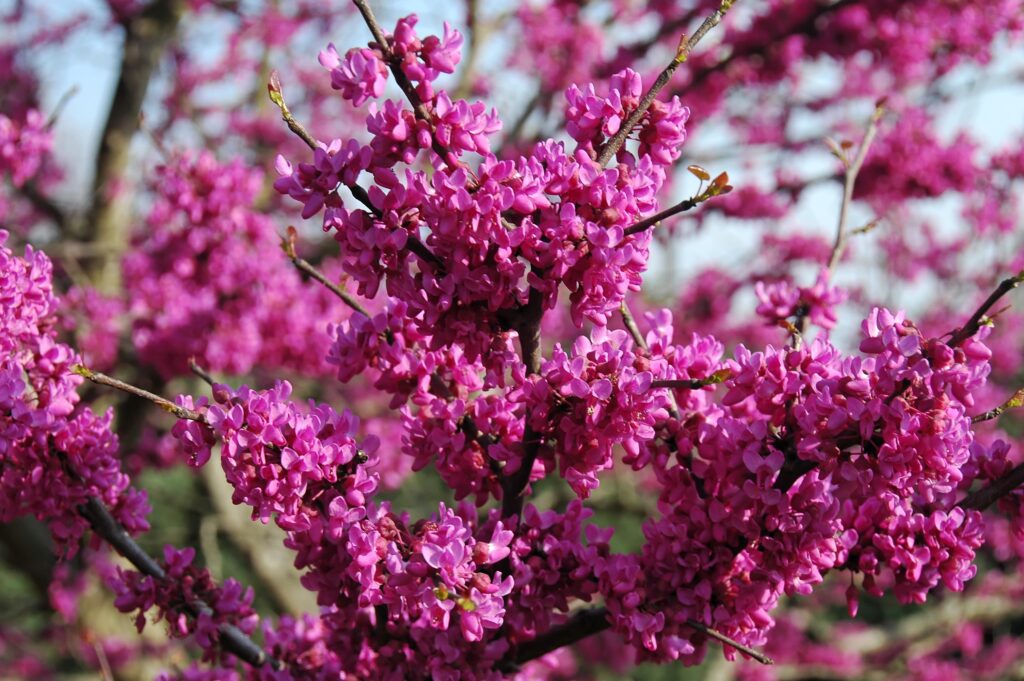
There are many redbud varieties that bring stunning spring color to a landscape. This ornamental favorite bursts with blooms along its branches in the early part of the season. You’ll want to pick a special spot to showcase this tree for its unmistakable flowers that appear before many of its neighboring trees even begin leafing out. Redbud is also a great companion to dogwood and other spring-flowering trees, especially in woodland landscapes.
Popular redbud varieties
When selecting a tree for your landscape, it’s important to choose one that will thrive in the conditions where you are planting. Hardiness zone is just one component. Choosing a redbud variety that fits your growing space and conditions will help make your tree healthier and easier to maintain. For northern areas, select northern strains of redbud such as those from Wisconsin or Minnesota. For dry areas, select western strains. There are many redbuds to choose from with various traits. Here are a few options:
- Eastern redbud – the quintessential redbud with pretty pink flowers
- ‘Forest pansy’ – lovely purple foliage and flowers
- ‘Pinkbud’ – a western strain with pink flowers
- ‘Royal white’ – a northern strain with white flowers
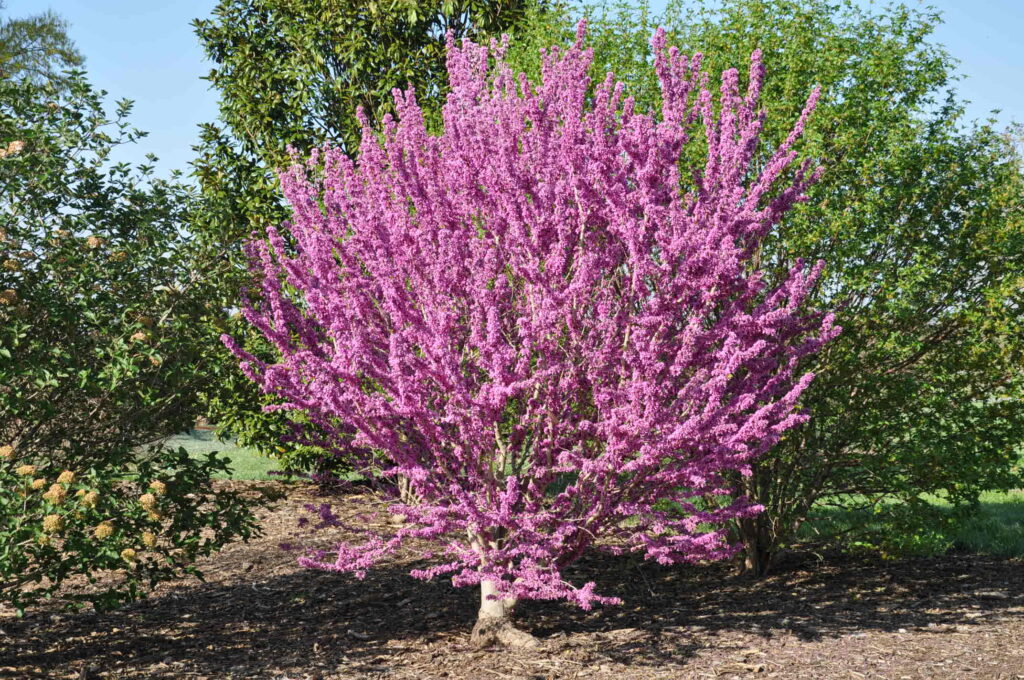
- ‘Chinese redbud’ – generally grows as an open shrub and an excellent choice for small spaces
- ‘Western redbud’ – a California native that can be grown as a tree or shrub
- ‘Oklahoma’ – a western strain with waxy, green leaves and dark red flowers
- ‘Texas White’ – pure, white blooms and glossy leaves
Caring for redbuds
Plant redbud varieties in full sun for the best growth and flowering. However, be sure to water regularly if dry conditions persist. Drought is a concern in summer and, as such, proper irrigation is important.
When redbuds are young, structural pruning will help ensure a stable form and attractive shape. Fungal diseases are a common problem. One example is verticillium wilt. As the name implies, leaves of infected redbuds wilt or curl before beginning to brown. Additionally, leaf spot fungi, including anthracnose, attack this species during wet springs. Preventative treatments can help protect redbud varieties from disease and insect infestation.