Cold weather is already here in many parts of the country, but it’s not too late to begin winter tree care. Keep these recommendations in mind and you’ll have happier trees through winter and into next spring!
Tree pruning in winter
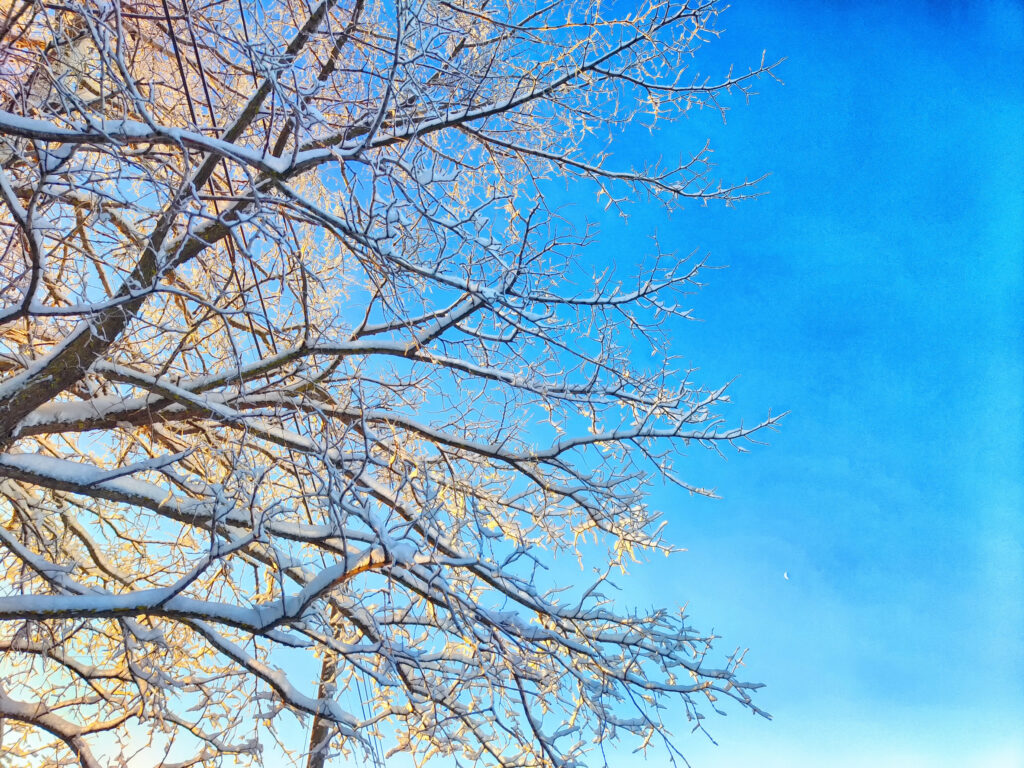
Now is the time to look for any dead branches that may be at risk of falling with the added weight of snow or ice. In fact, pruning in general is a good winter tree care task. Most plants go dormant and fungi are less of a concern. Further, when there are no leaves on deciduous trees, an arborist can clearly see the tree’s structure and growth habits. This makes it easier to identify issues and make good pruning decisions.
Cultural care is important year round
Mulching and irrigation should be routine practices throughout the year. Both are important not just during the growing season, but also during winter. Mulching helps maintain soil moisture and provides a buffer against stress to the root zone. In terms of irrigation, even though plants may be dormant, many still require a minimum amount of water to meet their needs. Supplemental watering when there is no rain or snow is particularly important for evergreens, shallow-rooted species and newly planted trees. Be sure to water only when temperatures are above 40 degrees Fahrenheit to allow for absorption before freezing.
Deicing salt is another winter tree care consideration. Remember that while salt might be good for driveways, it can be terrible for trees. Increasing salt levels in the soil can damage and kill fine roots. This damage prevents healthy levels of nutrient uptake. In areas near roads and driveways, consider planting trees there are more tolerant to salt such as birch, oak or juniper.
Pest management considerations
Another benefit of pruning in winter is increased airflow and sun penetration, which can be a great help in reducing the likelihood of future fungal infection. If the foliage stays mostly dry, then the plant is less likely to become infected. If evidence of fungal pathogens was already present on the past growing season’s foliage, you’ll also want to do what you can to prevent reinfection. Rake and remove fallen foliage to help reduce the levels of infectious fungal inoculum. Leave this material over the winter and it will likely reinfect new foliage in the following spring.
Now is also a good time to take care of accessible scale insecct populations. Consider scrubbing away old scale remains or even reducing an active infestation before populations rise again next year. Scraping away the protective covers and physically removing the insects can greatly reduce future populations. A Certified Arborist can help control smaller populations with targeted foliar applications.
Finally, wildlife can be a huge tree care nuisance as animals scavenge for food during winter and eat available landscape plants. Products are available to help deter wildlife feeding. Protecting feature plants from this feeding in the winter is especially important as fewer wild plants may be available for wildlife to feed on.