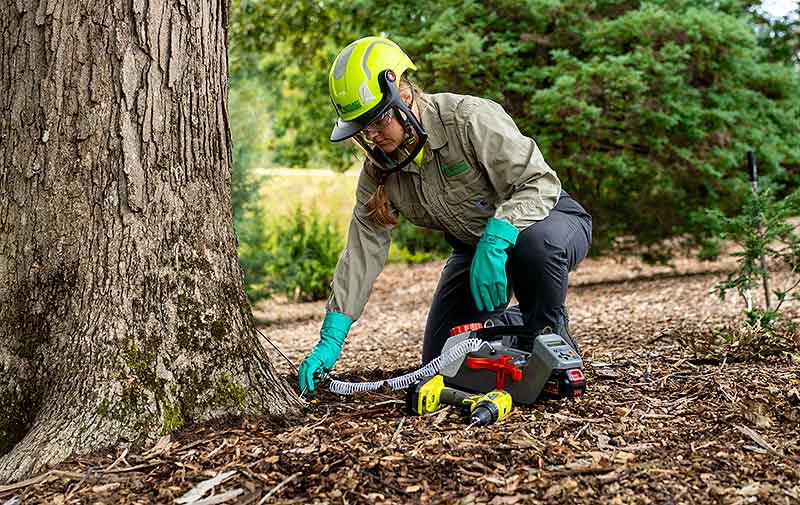
Integrated Pest Management (IPM) is a holistic strategy that incorporates biological, cultural, physical, and chemical tools to minimize pest damage. In every situation, one or more of these approaches are used to best control pest damage and avoid unintended risk to people, property, and the environment.
Understand the life cycle
Knowing when pests are most vulnerable helps determine the best time for control. This might mean targeting larvae rather than adults or waiting for weather patterns that favor treatment success.
Monitor and identify accurately
Not all bugs are bad. IPM relies on identifying what is actually causing damage before taking action. Monitoring helps distinguish between harmful pests and beneficial organisms.
Use thresholds
Damage thresholds help determine when action is necessary. For example, a few aphids may be acceptable, but a full-blown infestation warrants treatment.
Apply targeted treatments
When intervention is needed, IPM favors the least disruptive options first — such as pruning infested branches, using natural predators, or applying selective products.