


Hot, dry summers can place intense stress on landscape trees, and the effects of drought are often more serious and persistent than they first appear. Moisture stress disrupts nearly every function in a tree, reducing photosynthesis, slowing growth, and increasing susceptibility to borers, bark beetles, branch canker diseases, and root pathogens.
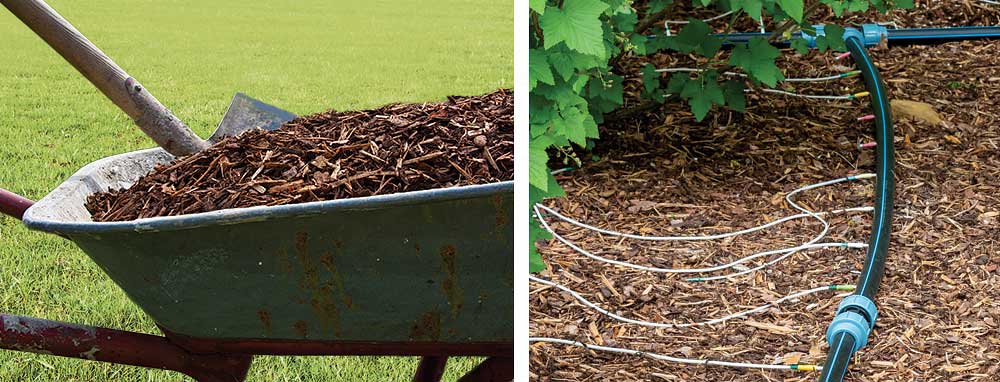
Proper irrigation is the most effective way to protect trees during extended dry periods. Most established landscape trees require about 2.5 centimetres of water per week during the growing season, delivered to the root zone beneath the canopy. Newly planted trees, root‑damaged trees, and trees growing in sandy soils typically need more frequent watering, such as twice per week. Drip irrigation and soaker hoses are especially effective given that they deliver water slowly and directly to roots while reducing runoff, evaporation, and wetting of foliage.
More water is not always better, however. Over‑irrigation can stress roots and promote disease, causing problems visually similar to drought stress. Irrigation systems should be adjusted for rainfall, temperature, soil type, and plant needs rather than left on a fixed schedule. Over-watering of tree species that are naturally adapted to xeric climates and periodic drought is a common mistake.
Mulching is another simple but powerful drought‑management tool. A 5- to 10-centimetre layer of organic mulch such as wood chips, bark nuggets, or leaves helps conserve soil moisture, moderate soil temperature, and reduce competition from turf and weeds.
Ultimately, the best solution in areas where severe drought is commonplace is to select trees with tolerance to such harsh conditions. Drought tolerance may be due to succulent tissues that store water; fast-growing deep root systems; or thickened, waxy leaves.
A combination of appropriate plant section, thoughtful irrigation, proper mulching, and routine monitoring gives trees the best chance to withstand severe summer drought and recover when conditions improve.