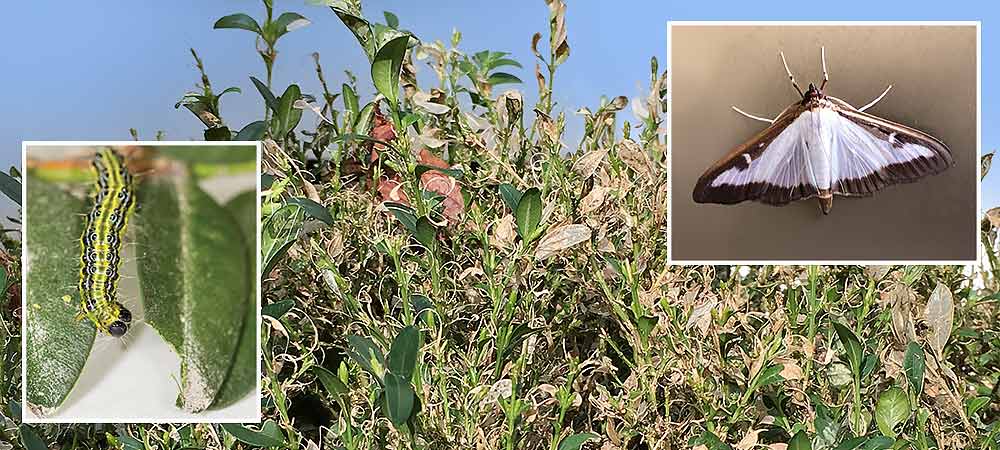
The box tree moth (Cydalima perspectalis) is a defoliating pest of box (Buxus) plants that was first detected in North America in 2018 in Toronto. This insect is originally native to East Asia, but has proven to be highly invasive outside its home range. Box tree moth was detected in Germany in 2006 and has since spread across Europe, leaving a trail of defoliated ornamental and wild boxwoods in its wake. Containment and eradication efforts are under way in some areas, but property owners should be alerted to this new pest and its potential to spread.
Adult box tree moths lay pale yellow eggs that overlap like shingles on the underside of leaves. Eggs hatch into greenish-yellow caterpillars with black spots that feed on boxwood foliage and produce webbing and a trail of frass (waste) pellets. After sufficient feeding, caterpillars transition into their pupal stages before emerging as either white or dark gray adult moths. Here in the United States, while up to two generations are expected per growing season in the northern range, as the pest moves farther south it may be possible to complete up to five generations.
The best time to halt the spread of any new invasive species is immediately after detection. When infestations are small, hand removal and disposal of caterpillars can be an effective management solution. Your Bartlett Arborist Representative can tell you about other management strategies to stop newly hatched larvae before they grow into more easily noticed, hungry caterpillars. In many cases, plant health care programs including fertilization, mulching, and irrigation can help boxwoods defoliated by box tree moth recover from damage.