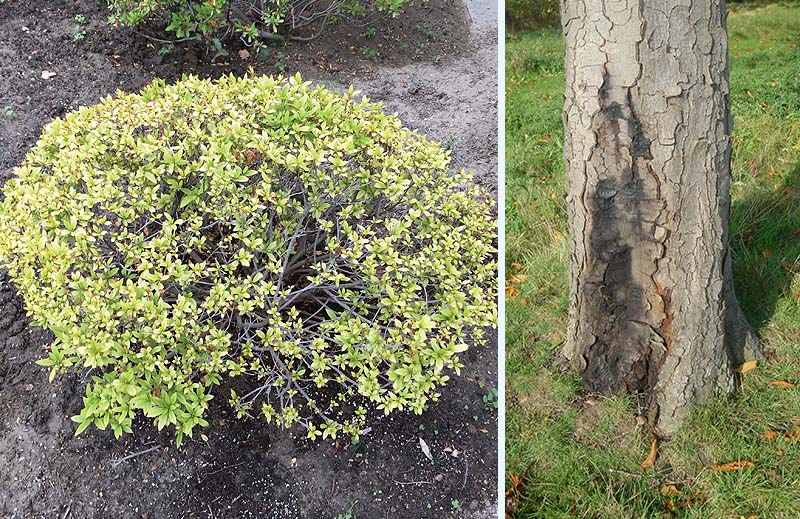
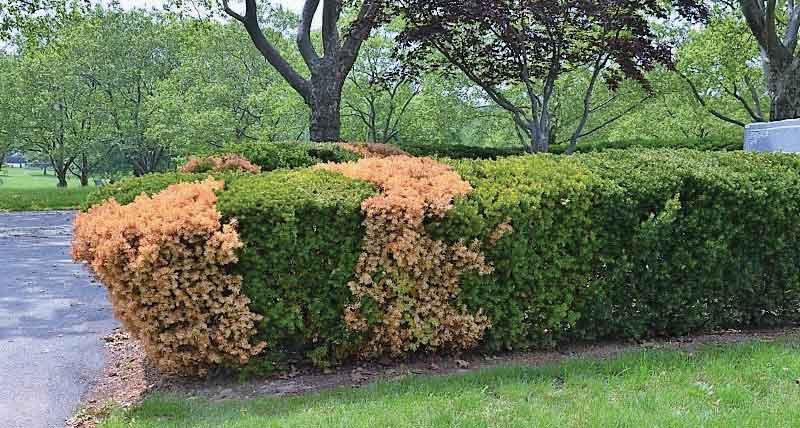
Phytophthora root rot affects many species of woody landscape plants. The most susceptible species that are frequently infected include the following:
- Rhododendron
- Azalea
- Boxwood
- Dogwood
- Daphne
- Conifers (particularly Taxus and Juniper)
- Holly
Phytophthora derives its name from the Greek language and literally means “plant destroyer”. It’s a fitting name for this pathogen.
A soil-borne microorganism, Phytophthora species are more closely related to brown algae than to fungi. They grow and produce spores under wet soil conditions. The spores (known as zoospores) have flagella that allow them to move through water. Once finding a host, zoospores germinate and infect fine roots. Sometimes, the pathogen progresses into larger roots, the root flare, and even into the stem. This causes the death of the plant. Poorly drained and/or persistently wet soils favor the development of this disease.
Plants with root disease appear unhealthy; leaves will become yellow and stunted, and new growth slows. The roots of affected plants are black and shriveled.
Phytophthora root rot is best prevented by planting trees and shrubs on well-drained soils that are amended with organic matter. Monitoring irrigation carefully to prevent saturated soil conditions is also critical. Plants exhibiting early stages of root disease may respond well to soil treatments with systemic fungicides and cultural practices, but plants with later stages of disease are not likely to recover. Preventive management in maintaining good soil drainage and establishment of plants is essential to protecting plants from Phytophthora root rot.